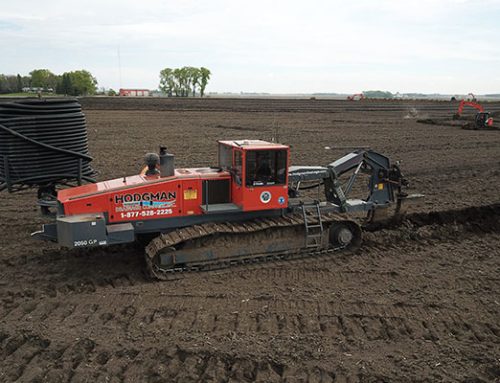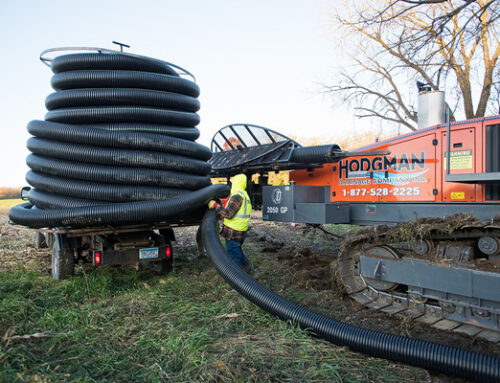
Field tiling in Worthington, MN can help agricultural fields recover from heavy rainfall by moving excess water away from the crop root zone and improving overall soil drainage.
When rainfall saturates a field, timely water removal can help restore workable conditions and reduce prolonged moisture that may interfere with planting, equipment access, and crop development.
For ag operations in southern Minnesota, effective drainage is an important part of agricultural planning. Heavy rain can leave low-lying areas saturated while delaying fieldwork.
A properly designed tile system provides an underground pathway that helps excess water leave the soil more efficiently.
Why Does Heavy Rain Create Problems for Farm Fields? | Field Tiling in Worthington, MN
Rainfall is essential for crop production, but too much water in a short period can create challenging field conditions. When soil pores remain filled with water, there is less room for the air that plant roots need.
Excess moisture can contribute to:
- Delayed planting and fieldwork
- Compacted or damaged soil from equipment
- Poor root development
- Uneven crop growth
- Standing water in low areas
When fields remain wet for extended periods, it can take longer to restore productive conditions. Drainage infrastructure can help manage excess moisture instead of relying on natural evaporation and surface runoff alone.
Also Read: How Can Field Tiling Improve Harvest Potential? | Field Tiling Company in Granite Falls, MN
How Does Field Tiling Move Excess Water?
Field tiling uses perforated underground pipes installed at planned depths and spacing throughout a field. Water enters the tile system through the surrounding soil and moves toward designated outlets.
Unlike surface drainage methods that primarily move visible water, tile systems work below the ground. This allows excess moisture within the soil profile to be managed even after standing water has disappeared from the surface.
Well-planned agricultural drainage systems can therefore help create more consistent soil moisture conditions across areas that are prone to saturation.
What Happens After a Major Rainfall Event? | Field Tiling in Worthington, MN
Following heavy rainfall, a functioning tile system can continue carrying water away from saturated soil. As excess moisture leaves the root zone, the field may begin returning to more workable conditions.
This does not mean a tiled field will become dry immediately after every storm. Drainage capacity depends on factors such as soil characteristics, rainfall intensity, tile layout, outlet conditions, and the amount of water entering the system.
However, proper field tiling gives excess water a defined route out of the soil rather than letting it remain trapped for longer periods.
Can Field Tiling Support More Consistent Crop Conditions?
Yes. Managing excess water can contribute to more consistent conditions throughout a field. Areas that repeatedly become saturated may otherwise create uneven crop development and make field operations more difficult.
For agricultural producers, this consistency can be valuable when planning planting, cultivation, harvesting, and equipment movement. Better water control also supports broader agricultural water management by helping producers manage subsurface moisture.
A tile system’s effectiveness depends heavily on proper design. Before installation, consider soil type, field elevation, existing drainage, outlet locations, and the property’s specific water patterns.
Help Your Fields Recover After Heavy Rain | Field Tiling in Worthington, MN
You can’t prevent heavy rainfall, but you can manage its effects on agricultural land with the right drainage infrastructure.
Proper field tiling in Worthington, MN can help move excess soil moisture away from the root zone, improve field accessibility, and support more predictable conditions following wet weather.
If your fields regularly struggle with saturated areas or slow recovery after storms, Hodgman Drainage can assess your property’s drainage needs.
Hodgman Drainage has been helping farmers and landowners with drainage needs since 1982, bringing more than 40 years of experience to agricultural projects.
If your fields regularly struggle with saturated areas or slow recovery after storms, contact us today to discuss your field tiling needs and explore practical drainage solutions.